
You Already Know Something Has Changed
You noticed it at Thanksgiving. Or maybe it was a phone call that went on too long and circled back to the same story three times. Maybe it was the refrigerator you opened when you visited — the expired milk, the half-eaten something wrapped in foil from a date you couldn't make out.
You didn't say anything. Neither did your parent. You drove home and sat with it.
That feeling — that quiet, low-grade alarm that has been going off in the back of your mind — is not paranoia. It is not disloyalty. It is love paying attention.
And it is usually right.
Why Families Wait — And What It Costs Them
I founded Elderhood Society because I kept hearing the same story — from neighbors, from families navigating this on their own, from people who found me before they even knew what they were looking for. Almost without exception, the people who reach me say:
"We saw the signs. We just didn't know what to do with them."
California has no legal trigger point that tells a family when to act. There is no test your doctor runs that prints out a result saying "time to move." The decision is yours — and that ambiguity is exactly what makes it so hard.
What I can tell you is this: waiting rarely makes it easier. It usually means the next conversation happens in an emergency room rather than over coffee. It means fewer options, less time, and more decisions made under pressure rather than with care.
The families I serve who are most at peace are the ones who started the conversation early — even when nothing felt urgent yet.
The Signals Worth Paying Attention To
These are not dramatic. That is exactly what makes them easy to dismiss.
At Home
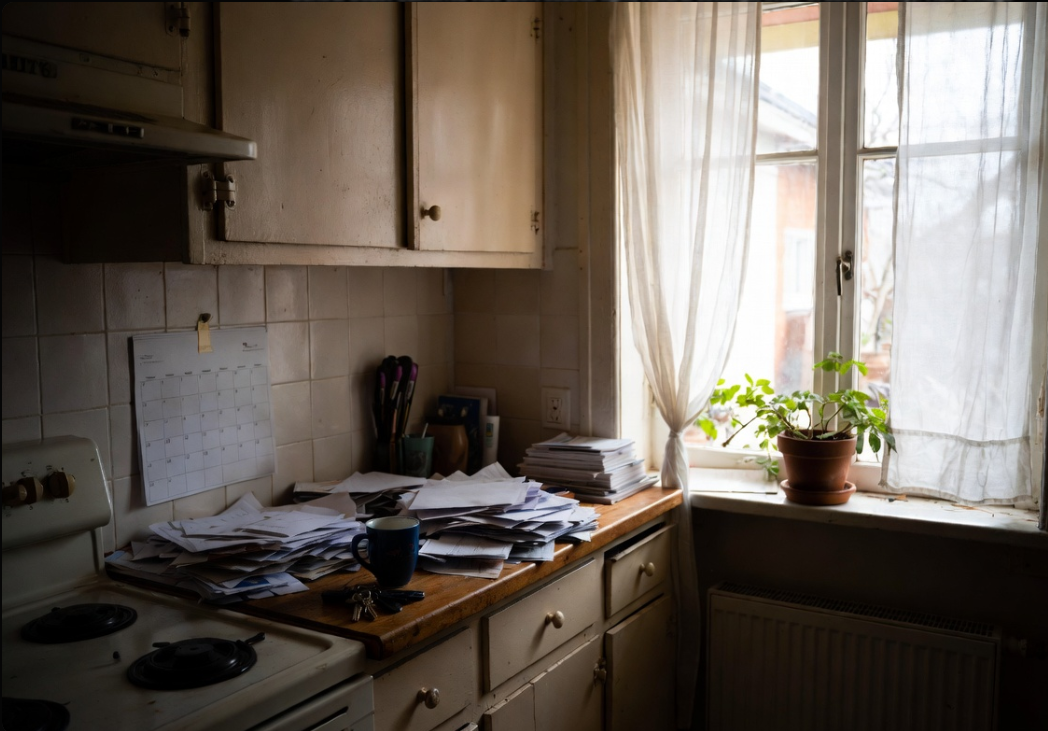
California's Health and Safety Code defines several categories of functional decline that trigger the need for licensed residential care — but you do not need a legal framework to recognize them. You need to visit, pay attention, and trust what you see.
Look for:
- Mail piling up — bills unopened, subscriptions forgotten, correspondence ignored. This is often the first sign of cognitive load becoming too heavy.
- Medication mismanagement — bottles out of order, pills skipped or doubled, prescriptions not refilled. In California, the Department of Social Services identifies medication errors as one of the leading causes of preventable hospitalization among seniors.
- Changes in the kitchen — food spoiling, meals skipped, weight loss. Cooking requires sequential thinking, and when that starts to slip, nutrition is usually the first casualty.
- A home that no longer feels cared for — not messiness, but a kind of entropy. The things that used to matter — a clean counter, a made bed, a watered plant — quietly abandoned.
- Unexplained bruises or falls — California law requires licensed care facilities to document and report falls, but at home, they often go unmentioned. Ask directly.
In Conversation

- Repeated stories within the same conversation — not nostalgia, but a loop that resets. This is different from forgetting a name. It is a structural change in how memory organizes itself.
- Confusion about time — not knowing the day, the month, or the sequence of recent events. California's Lanterman-Petris-Short Act and related elder care law draws a distinction between memory impairment and dementia — but for a family, the practical question is simpler: is this person safe?
- Withdrawal — a parent who used to call three times a week now calls once. Who used to go to church, to the senior center, to the neighbor's house — and now doesn't. Isolation accelerates cognitive decline. It is both a symptom and a cause.
- Anxiety or paranoia — suspicion of people they trusted, accusations that don't track, fear that feels outsized. This can signal early dementia, UTI (which mimics dementia symptoms in older adults with startling frequency), or medication interaction. All of these are treatable — but only if someone pays attention.
Driving
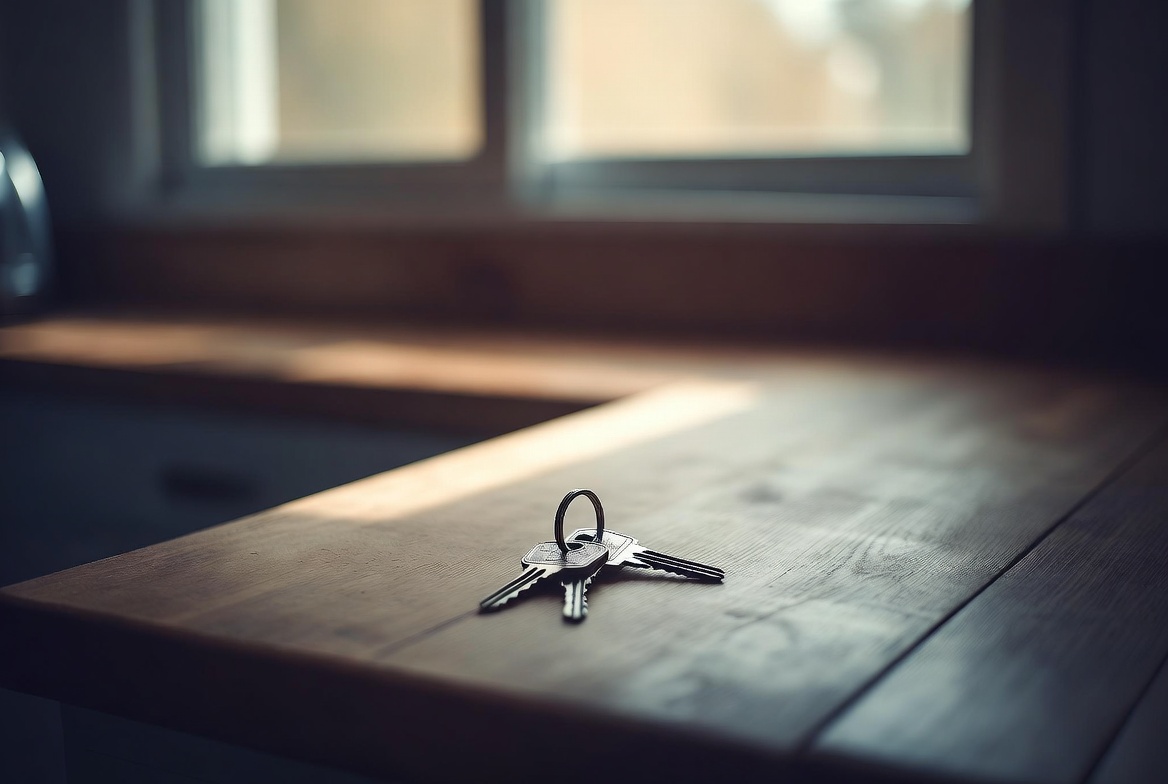
This one deserves its own section because it is almost always the hardest.
In California, a physician can report an unsafe driver to the DMV without the patient's consent under Vehicle Code Section 12818. But most families don't get there through a doctor. They get there through a close call, a dent that appeared without explanation, or a parent who drove somewhere familiar and got lost.

Driving is independence. Taking the keys is one of the most loaded conversations a family can have. But a parent who is no longer safe behind the wheel is a parent who can no longer safely live alone — not because of the driving itself, but because of what the driving represents: the executive function, the spatial reasoning, the reaction time required to navigate a world that does not slow down.
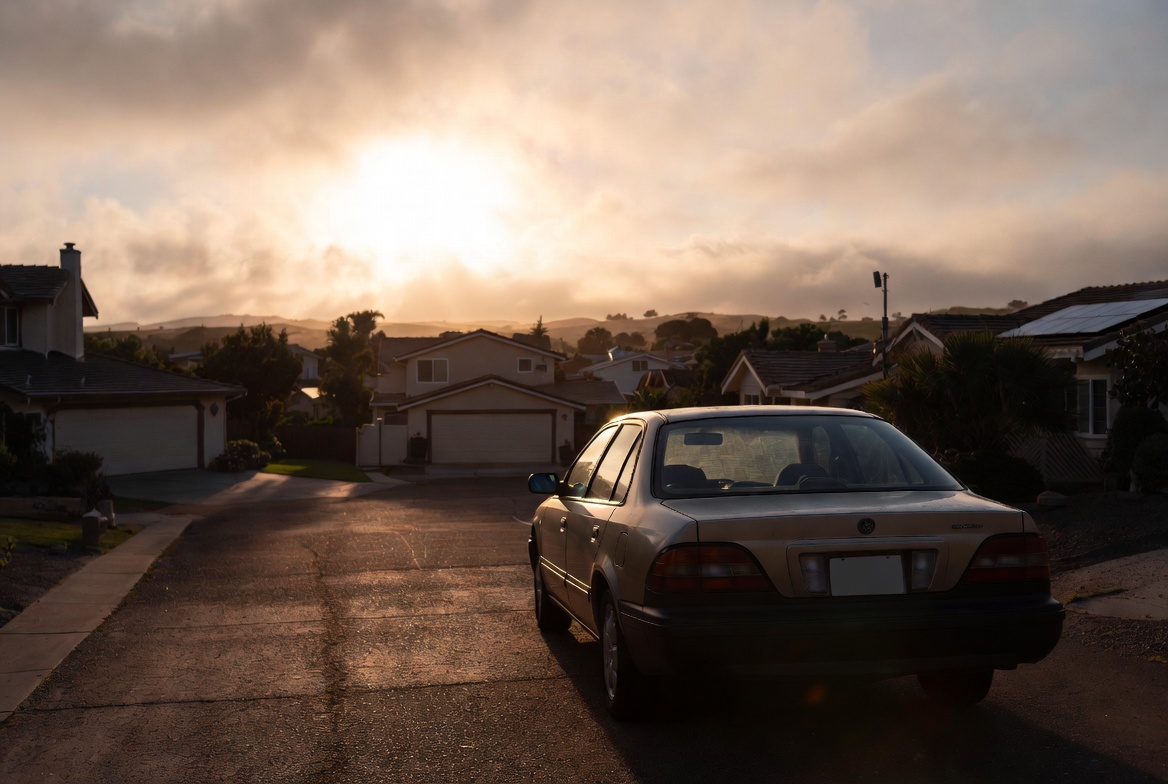
If driving has become a concern, the rest of this conversation is not far behind.
What California Law Actually Says
California's Residential Care Facilities for the Elderly (RCFE) are licensed and regulated by the Department of Social Services under Health and Safety Code Sections 1569 et seq. An RCFE is required when a person needs assistance with two or more Activities of Daily Living (ADLs) — bathing, dressing, eating, toileting, transferring, or continence — or when they have a cognitive impairment that creates a safety risk.
That is the legal threshold. But families rarely arrive at a care decision because of a checklist.
They arrive because of a Tuesday morning phone call where their mother didn't know what year it was. Because their father fell in the bathroom and didn't tell anyone for two days. Because they drove three hours to check on a parent and found a house that told a story no one had said out loud yet.
The law defines the floor. Love defines the conversation.
The Question Families Ask Me Most
"How do I even bring this up?"
There is no perfect script. But there are a few things I have learned from sitting in these conversations:
Start with observation, not conclusion. "I noticed the mail has been piling up and I wanted to check in" lands differently than "I think you need help." One opens a door. The other puts up a wall.
Make it about you, not them. "I've been worrying, and I want to make sure I understand what you need" is harder to argue with than "You need to move."
Bring curiosity, not a plan. The families who come to these conversations already decided are the ones who leave with the most damage done. Come with questions. Listen to the answers.
Do it before crisis. I cannot say this enough. A conversation at the kitchen table, while your parent is still themselves enough to participate in it, is a completely different experience than a conversation in a hospital hallway at midnight. One honors them. The other happens to them.
What Comes Next
If any of this landed — if you recognized something in these pages that you have been quietly sitting with — I want you to know that you are not alone in this, and you do not have to figure it out alone.
The next step is not a facility tour. It is not a checklist. It is a conversation.
I work personally with every family I take on. No intake forms. No call center. Just a conversation, as long as it needs to be, about what you are seeing and what your parent actually needs. I know the communities here — the directors, the staff, the honest picture of what each place is like on a Tuesday afternoon, not just on tour day.
San Luis Obispo County is not a market to me. It is where I live, where I work, and where I have built the relationships that make a real difference for the families I serve.
If you are ready to talk — or just ready to ask a question — I am here.
Phone: (805) 801-6911
Email: home@debralowelegacy.com
No cost to families. Ever. I am compensated by the care community when a placement is made.
This article is for informational purposes only and does not constitute legal, medical, or financial advice. California Health and Safety Code citations are provided for reference. Consult qualified professionals for guidance specific to your situation.
Senior Living · Field Notes
By Debra Lowe · San Luis Obispo County & North Santa Barbara County

There is rarely a single moment. No alarm goes off. No door closes and locks behind it. Most families I work with describe the same thing — a slow accumulation of small things. A missed pill. A refrigerator with expired food that keeps getting refilled with the wrong things. A neighbor who calls to say she hasn’t seen your mother outside in a while.
I have guided families through senior living transitions on the Central Coast for years. In San Luis Obispo, Paso Robles, Arroyo Grande, and all the communities in between, I have sat at kitchen tables with adult children who flew in from out of state, trying to figure out what “the next step” even looks like. What I have learned is this: the families who act early — before a crisis forces the decision — almost always find better options, at better prices, with far less stress.
This is a guide to the slow signals. The things worth paying attention to before they become urgent.
1. Safety at home is becoming a concern.
Falls are the leading cause of injury-related death among adults over 65 in California. But the concern is often quieter than a fall — it is the near-miss you did not hear about until later. The tub that is getting harder to use. The stairs that feel a little less certain. The stove left on.
If you have started to worry about what might happen when no one is watching, that worry is worth honoring. It is often the first signal families notice — and the one most easily dismissed as overprotective. It is not.
2. Medications are not being managed reliably.
Missed doses, doubled doses, medications taken at the wrong time — these create serious health risks for older adults, and they are among the most common early signs I hear from families. The pill organizer that used to be filled correctly is now a mystery. Prescriptions are not being refilled. Or they are being refilled too often.
Medication management is one of the primary services available in licensed residential care — and one of the most significant reasons families ultimately make a move. If this is already a concern, it is worth having a conversation about what options exist now, while you still have time to be thoughtful.
3. Nutrition and household upkeep are declining.
Weight loss that has no clear medical explanation. A kitchen that is harder to manage. Dishes in the sink, laundry left undone, a house that was always immaculate now showing the strain of it all. These are not signs of laziness or stubbornness — they are signs that the daily demands of independent living are exceeding capacity.
One of the things I appreciate about the residential care communities I work with here in SLO County is the rhythm of daily life they provide — meals prepared, a clean and safe environment, the quiet structure that makes everything feel more manageable. For many families, this alone changes everything.
4. Social isolation is increasing.
Research is clear that social isolation accelerates cognitive decline and increases the risk of depression in older adults. If your parent has stopped going to church, to their weekly card game, to the neighbors they used to see regularly — that withdrawal is a signal worth noting.
Isolation at home can feel like safety. It is often the opposite.
5. A recent hospitalization or health event changed things.
A hospitalization is often the moment families realize the baseline has shifted. Recovery is slower. Discharge planners are asking questions about what support is available at home. The doctor has mentioned “supervised living” in a way that felt different this time.
If you are in this moment right now — navigating a discharge and trying to figure out what comes next — I want you to know that this is exactly when families benefit most from having someone who knows the landscape. I can help you understand what level of care makes sense, which communities in San Luis Obispo County have openings, and what the process actually looks like from here.
6. The caregiver in the family is exhausted.
This one does not always get named. The adult child who has been driving over three times a week, managing appointments, doing the grocery shopping, worrying through the night — that person matters too. Caregiver burnout is real, and it affects the quality of care a parent receives.
Choosing a care community is not giving up. It is often the most generous thing a family can do — for their parent, and for themselves.
Ready to have a conversation?
I’m glad to help — even if you’re just trying to figure out where to start.
No cost to families. No pressure. Just a conversation with someone who knows every community on the Central Coast personally.
What working with me looks like.
I am a solo advisor — not a referral service, not a call center. When you call me, you get me. Here is how the process works:
- We talk. No intake form, no fee. Usually about an hour, in person or by phone. I listen first.
- I tour with you. I personally accompany families to communities that fit. I know the directors, the staff, and the honest picture of each facility.
- You decide, on your timeline. No pressure, ever. My fee is paid by the community when a placement is made — families pay nothing.
- I stay in the picture. After a placement, I remain available. This is a relationship, not a transaction.
© 2026 Elderhood Society · Debra Lowe & Associates, Inc. · San Luis Obispo, CA. This article is for informational purposes only and does not constitute legal, medical, or financial advice. Consult qualified professionals for guidance specific to your situation.